Position green
From concept to product vision
Position green is an expert in sustainability software compliance and assistance. It helps large organisations meet EU regulation as well as set decarbonisation targets and strategies.
Designer inside a product trio
6-10 months — 2024 to 2025
Problem space
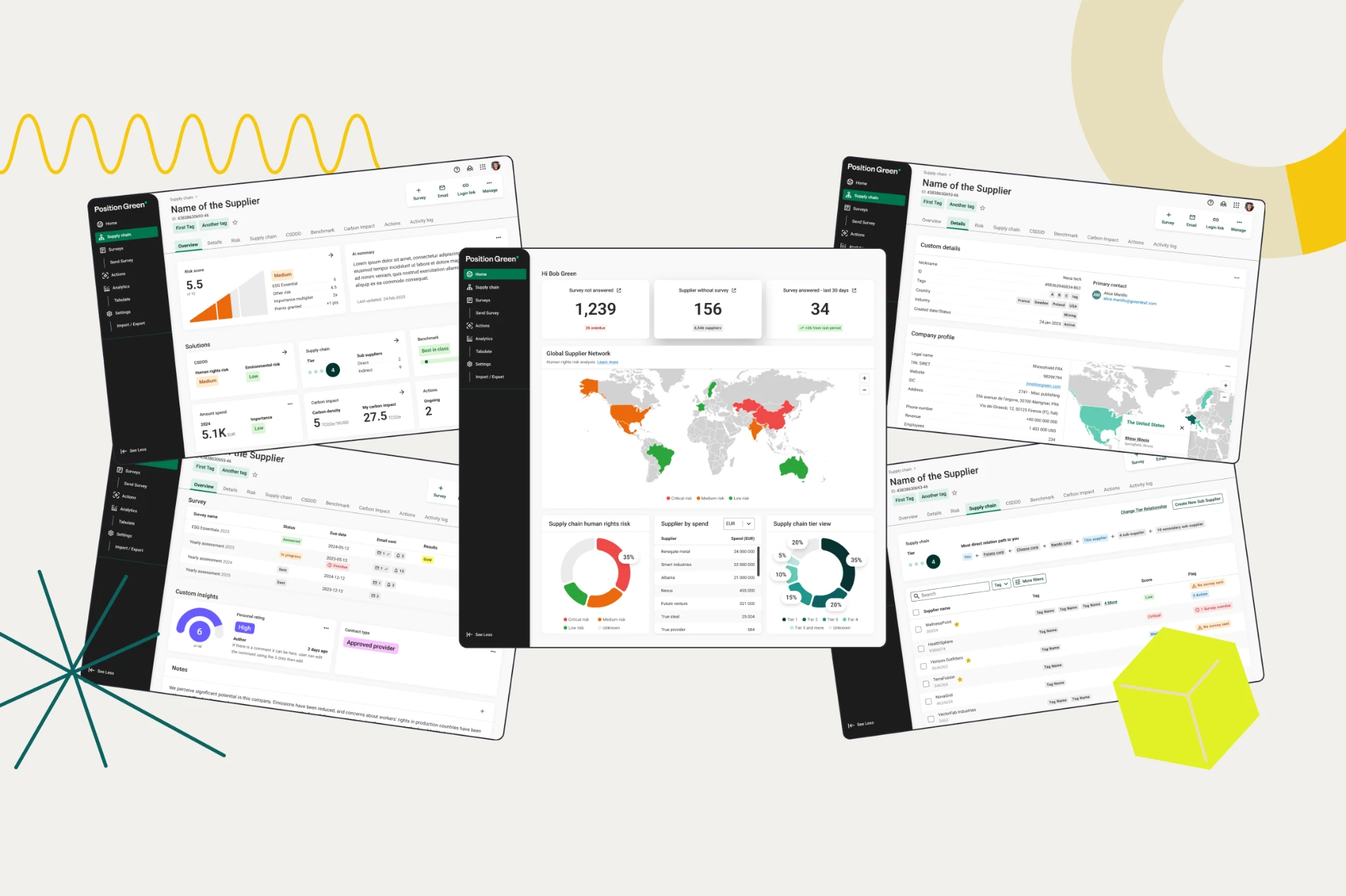
For a scale-up it is important to try a lot of ideas, build POCs and see what sticks. Ask what is needed and just stitch everything together. The problem is that over time this creates a complex product where things feel disconnected, unused features take up weight and users get lost in complexity. How do we create a system that can accommodate our experimentation and still make sense to customers?
Business strategy
The supplier assessment product sits next to a suite of several compliance solutions. We saw clear synergies appearing with other products where building an internal data sharing pipeline could increase the value. We also saw the coming of the CSDDD EU regulation (in 2027 back then) and needed to build the relevant capabilities. Our initial strategy was simply to ask “what else do we need to add”.
Goals & Ambitions workshop
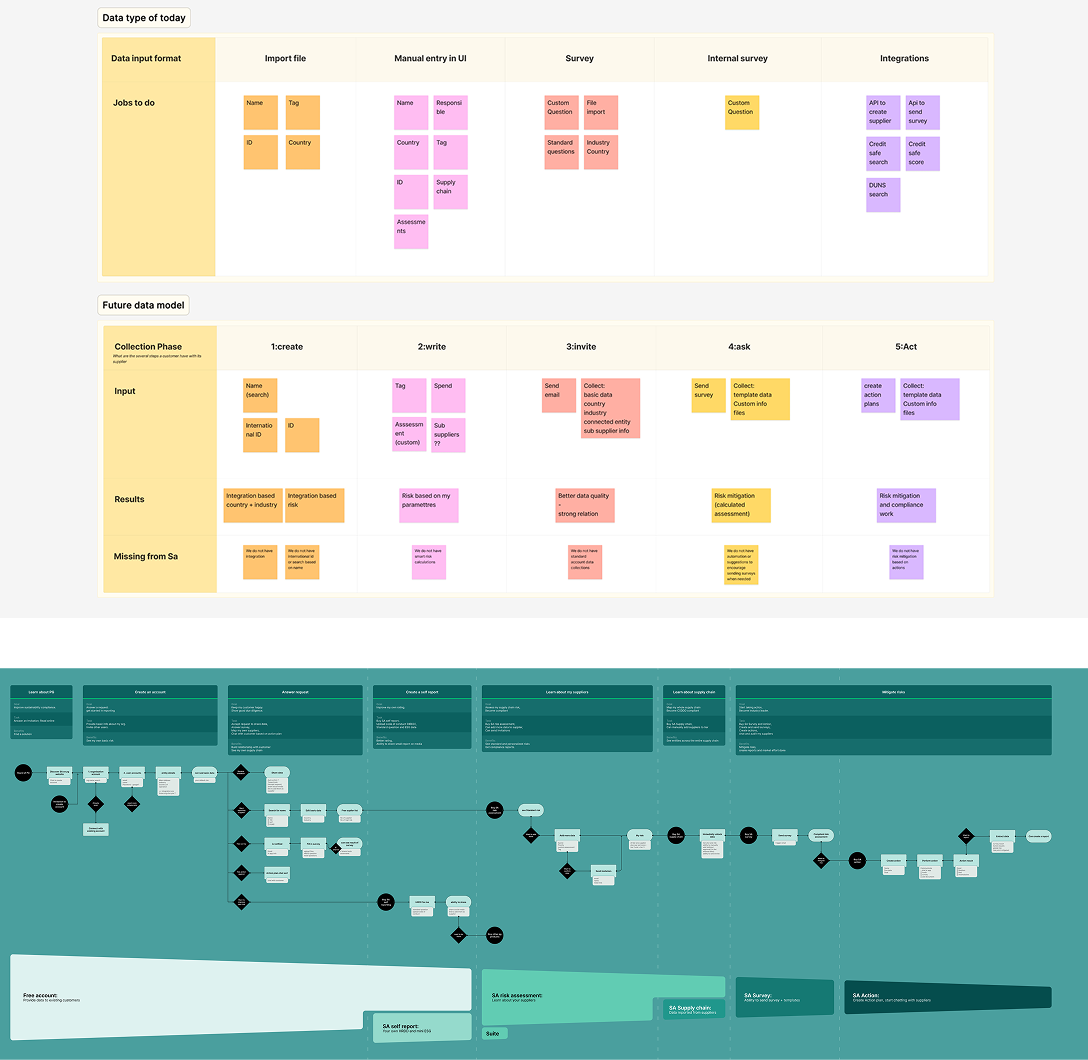
I conducted whiteboard workshops with the product owner and customer specialist to write down all the goals and different visions the team had about the future of the product, as well as how customers experience our platform. We created the ideal product-led user journey across a progressive sales funnel and presented the concept of this vision to the product director.

“My greatest contribution to the company has been to start thinking long term. What happens if all of our goals are reached, how should the product behave then, how shall we organise our system? I always allocated time to think and present how the current POC we are building today can be developed into additional value as we grow.”
Anchoring decisions to current feedback
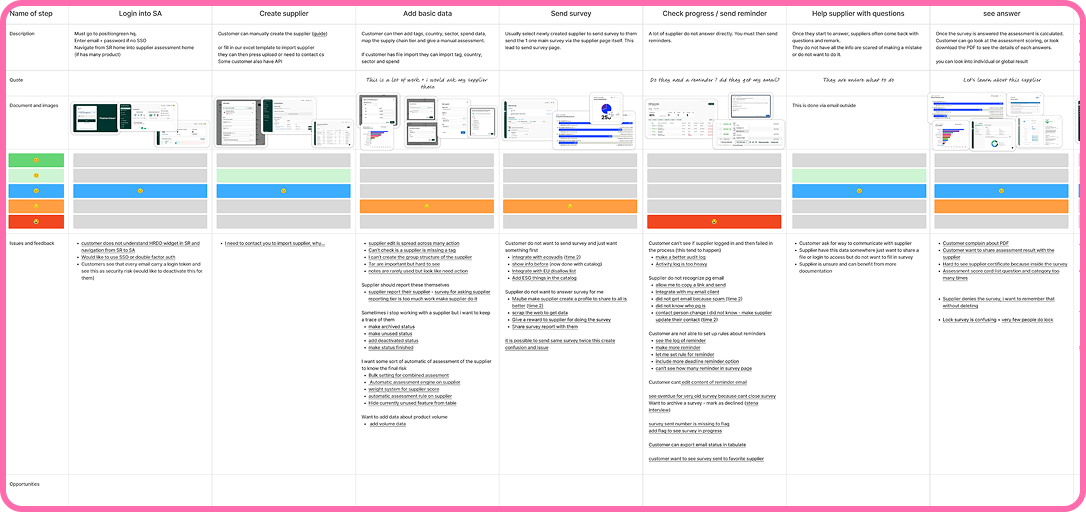
Beyond agreeing on a vision for a future customer experience that contains all the features we were thinking to add, I also went back to understand our current user journey, experience and choke points — what are the things from today we must fix in order to be successful tomorrow. This also allowed us to frame improvements into experience and task focus points. We know where a specific task sits today, how it should be improved next and how in the future it might look.
Progressive roadmap
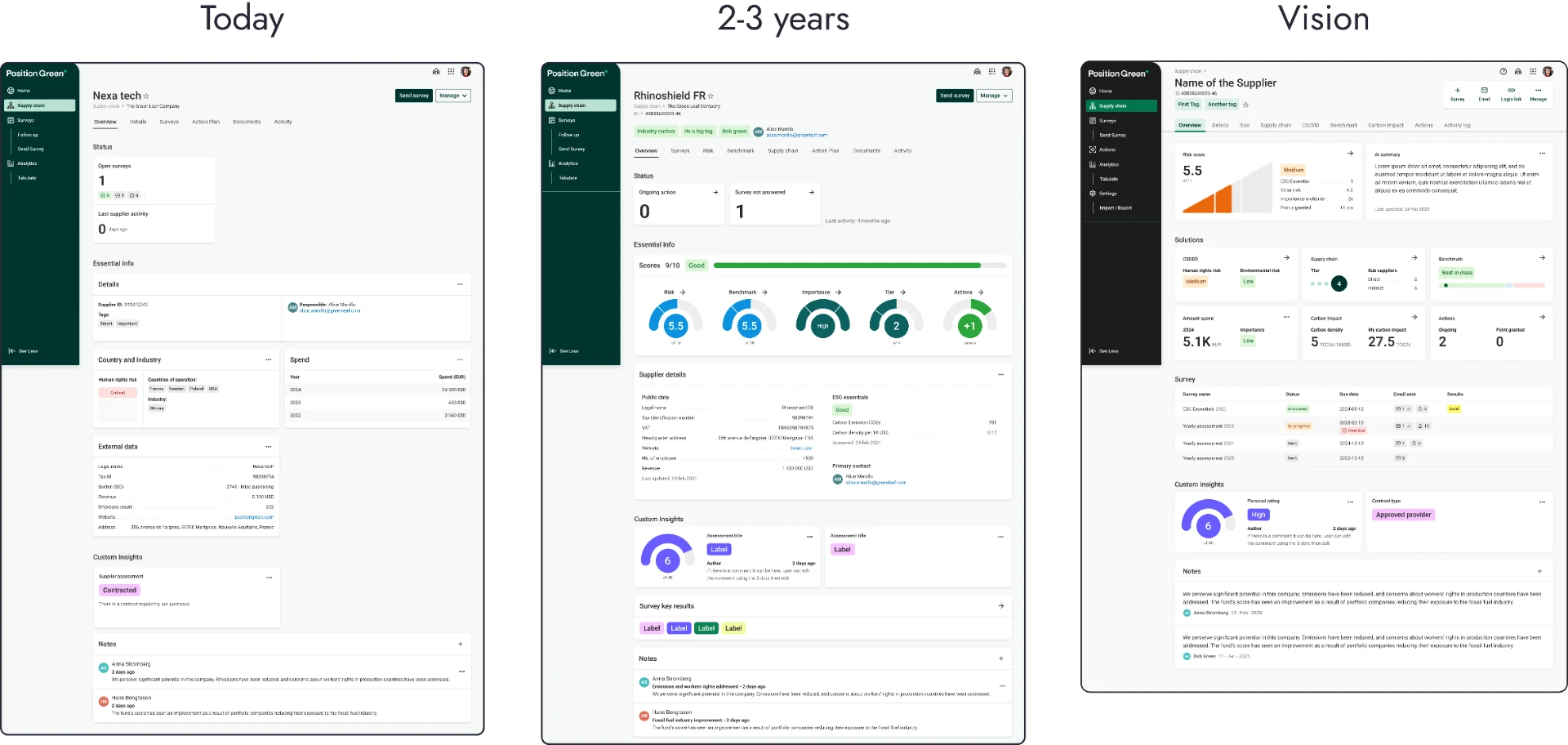
Outcome
I believe we really improved the speed of our decision-making and our communication both with the team and the stakeholders. We could align everyone on a vision and on the small steps we will do today that will move us towards this vision. This also simplified the work of developers who felt safer that things would not be redesigned several times and they could plan a back end ready to expand and develop in the right direction.
Learnings
We agreed on the mission, yes, but that is for tomorrow. The first product vision I put together got approved but never activated. It was too far in the future and not flexible enough to signal what we need to achieve in the next 3 years. I learned to keep the concept of a vision fuzzy and started working with intermediary points: what we can agree on building now, a 3-year goal we can present to investors, and a 5-6 year plan where everything might fit together.