Nederman
Industrial applications & HMI
Nederman is an industrial company specialised in air filter systems for factory floors. Its machines are installed at customers with high dusting environments like woodworking, or high chemical ones like pharmaceutical. The machines are controlled and attached to small HMI control panels where operators can check and control the system’s behaviour.
Design duo with product management
2 months — 2026
Problem space
We know that our dashboards are rarely operated (touched), they must serve at a glance and mostly become relevant in case of alerts. How can we make sure to serve enough overhead information on a small display while keeping readability? How do we make sure that if the user navigates down to a details view they can still see a global status for the whole system?
Business strategy
Nederman used to focus on the production and design of the actual machines, not the software attached to them. In 2023 a decision was taken to stop working with a software partner and start building the solution in-house. This meant that a lot of competence had to be acquired and a lengthy process to build a solution made by Nederman would start. The first phase is to replace the current software, with the next being focused on building further capabilities.
Previous solution as a start
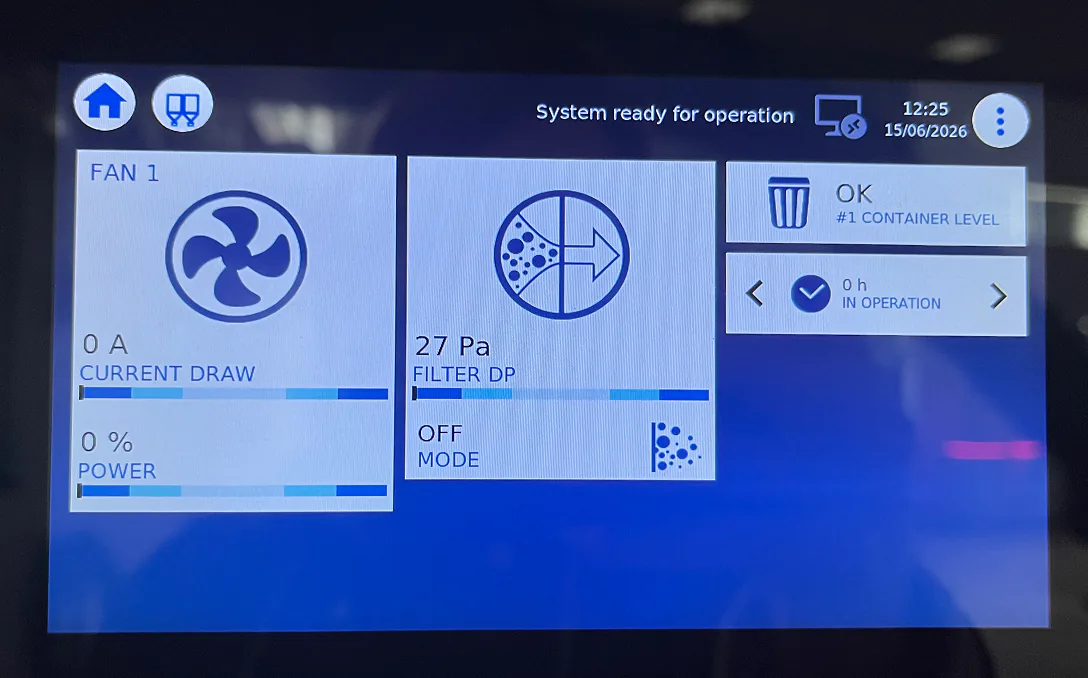
In order to make sure we were building the right things, part of the research was focused around understanding how the current system is running for a customer, what is typically set, and what they are daily looking at.

“When I joined the project, feature requests were coming to us on an individual basis, we were lacking context, could not see the full picture and did not understand the why behind something being requested. I took it upon myself to go into the lab, ask questions and document how the old solution was set up and used, what was the original experience our customers were facing, and the reasons behind what we are trying to fix.”
From a 10-inch to a 7-inch screen
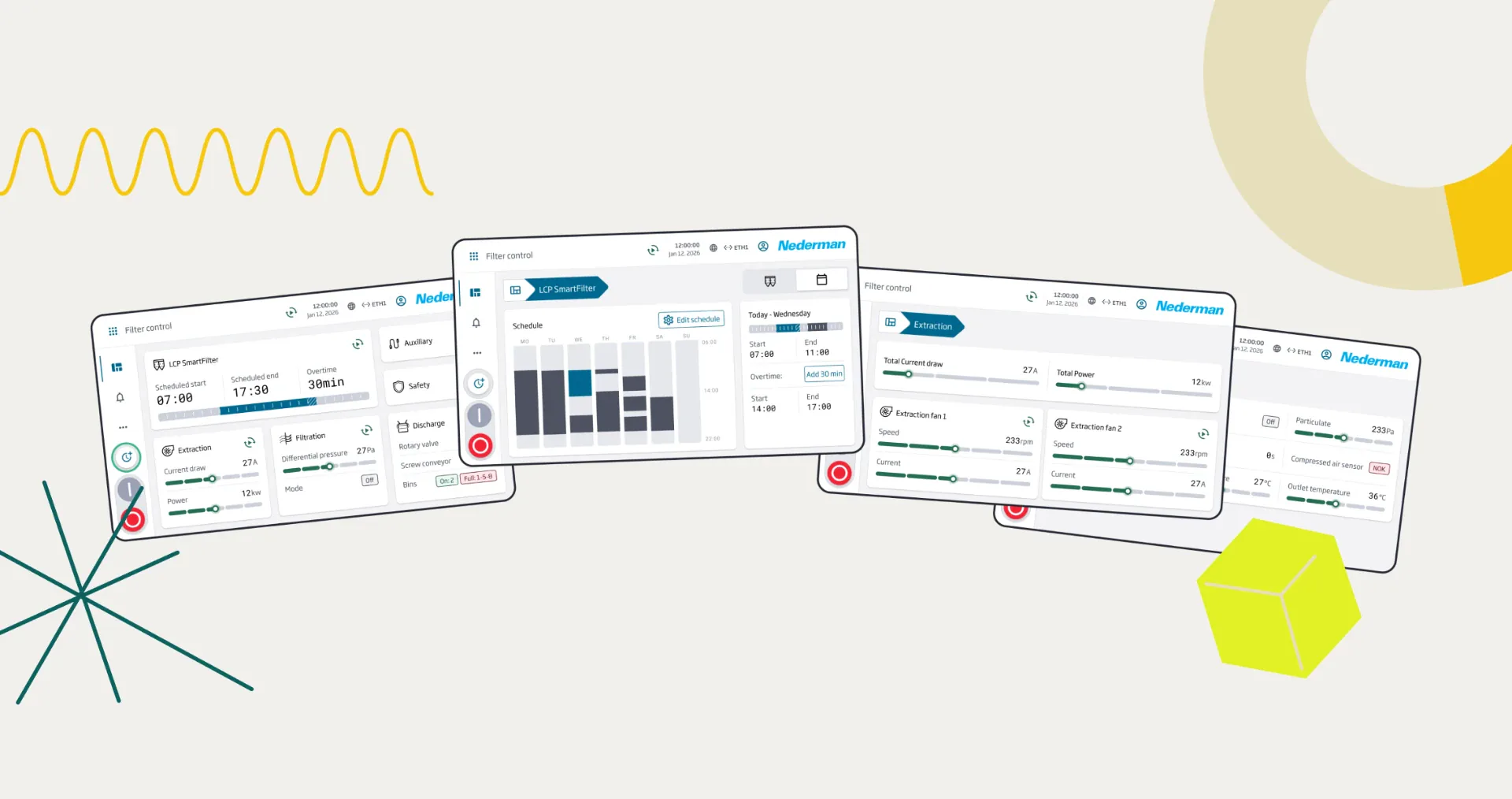
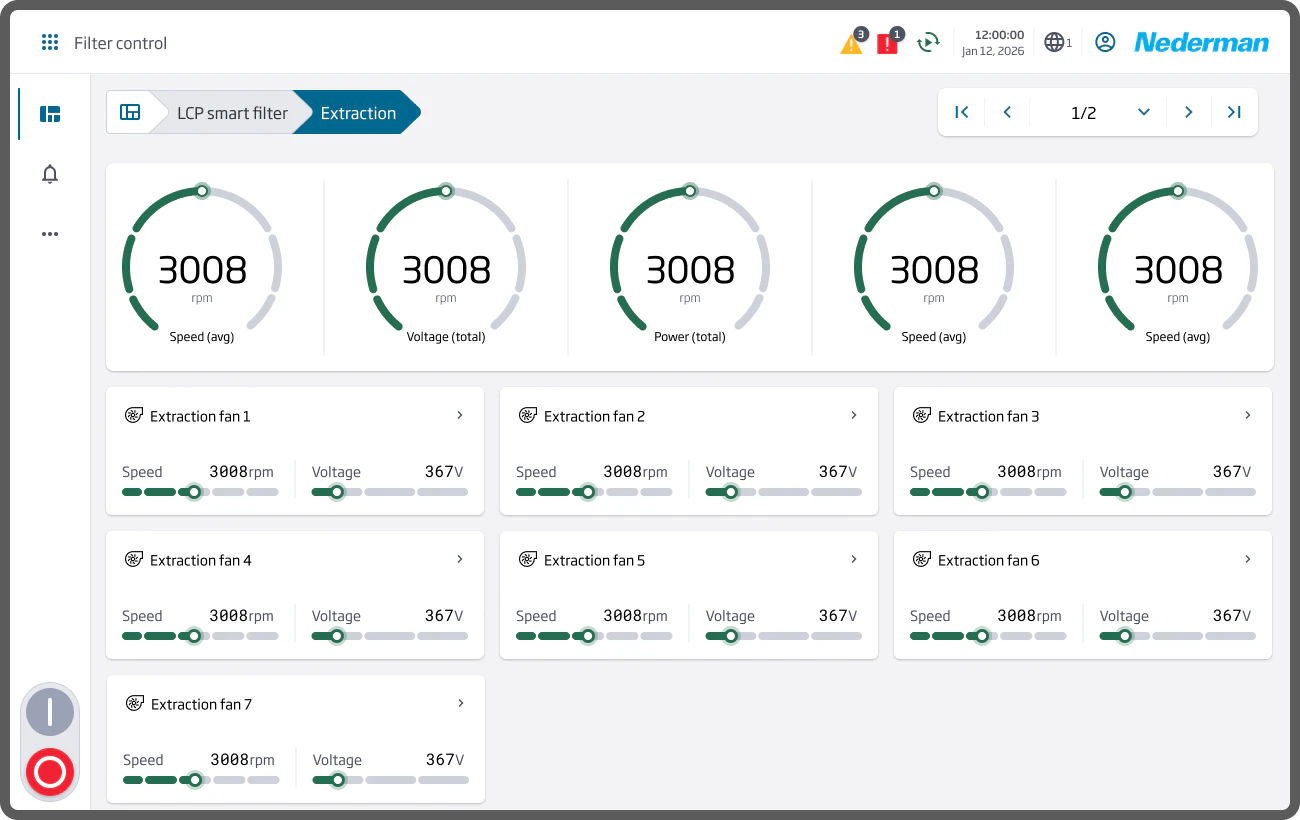
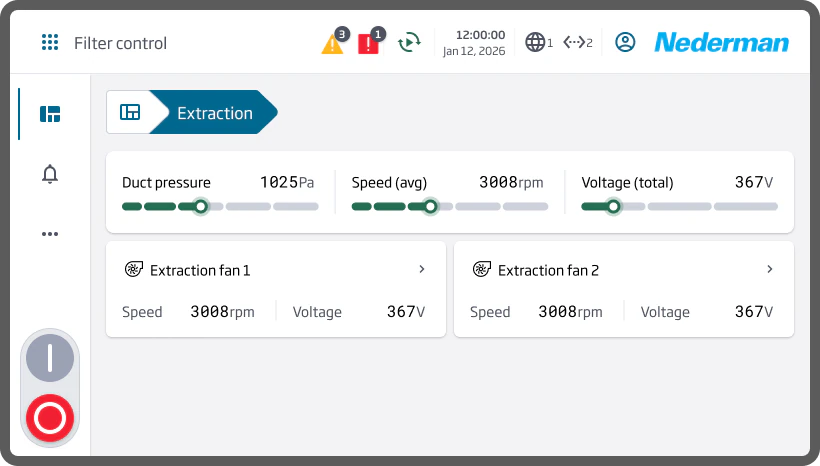
Our previous project was designed for a 10” display, and a lot of its design patterns were already approved. Here the challenge was to follow the same patterns and system on a much smaller 7” screen, with limited capabilities and limited scrolling. The extraction page shows it well: the gauges become one compact row of values, and the fan cards keep the same structure in a fraction of the space.
From data model to cards
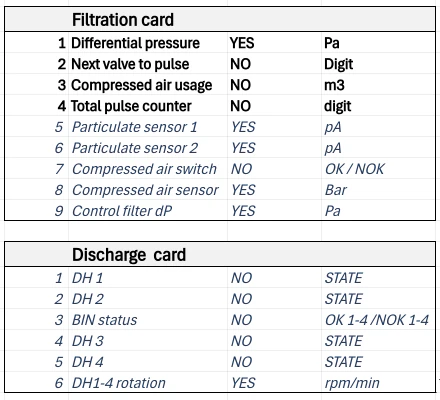
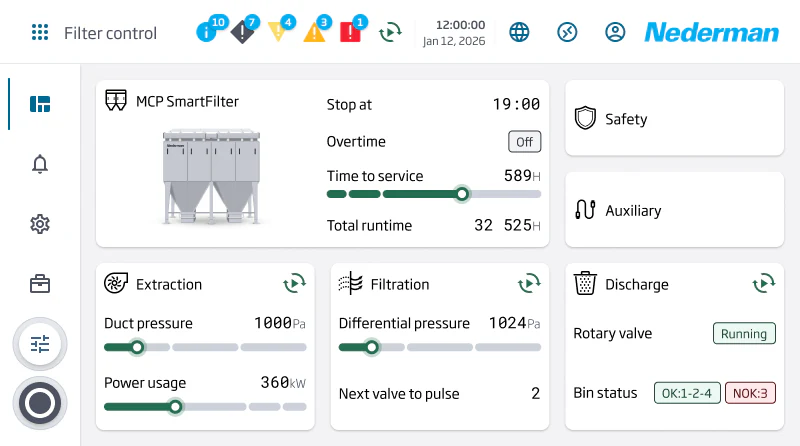
Each system is made of subsystems: extraction, filtration, discharge, safety and auxiliary equipment. I looked at how controllers running in the field are set up and listed which values belong to each subsystem and which matter most. That list became one card per subsystem, with simple rules for developers on what a card can show.
Final render
Try it: this is the click-through prototype of the panel, built in code on the Nederman design system, that I used to walk stakeholders through the product.
Outcome
The project was approved and budgeted, and will be built over the coming years. We are following a waterfall R&D approach: the solution is defined and validated up front, then developed in phases, starting with replacing the current software.
Learnings
With a long R&D cycle, the design has to hold up for years before it ships. A working prototype and clear documentation mattered as much as the screens themselves: they are what stakeholders approved, and what developers will pick up later.