Gigapay
Expanding to international payments
Gigapay is an invoice-consolidation platform that turns marketing campaign payments from enterprises and agencies into micro payouts for individual creators and influencers worldwide.
Solo product designer in a startup setup
5 months — 2023 to 2024
Problem space
For a startup previously focused on local Swedish payments based on the government identification infrastructure, the system was not designed to handle European compliance. We needed to create a simple and robust onboarding experience for international users that would scale without adding data collection issues and straining our support service.
Business strategy
The international payment infrastructure was already a separate entity from the Swedish one. This allowed us to perform a UX redesign, opening countries separately and improving as we go. We knew the UI redesign would come in a later phase, and we would build a system modular enough to integrate the Swedish infrastructure as part of the future model.
Legal compliance discovery
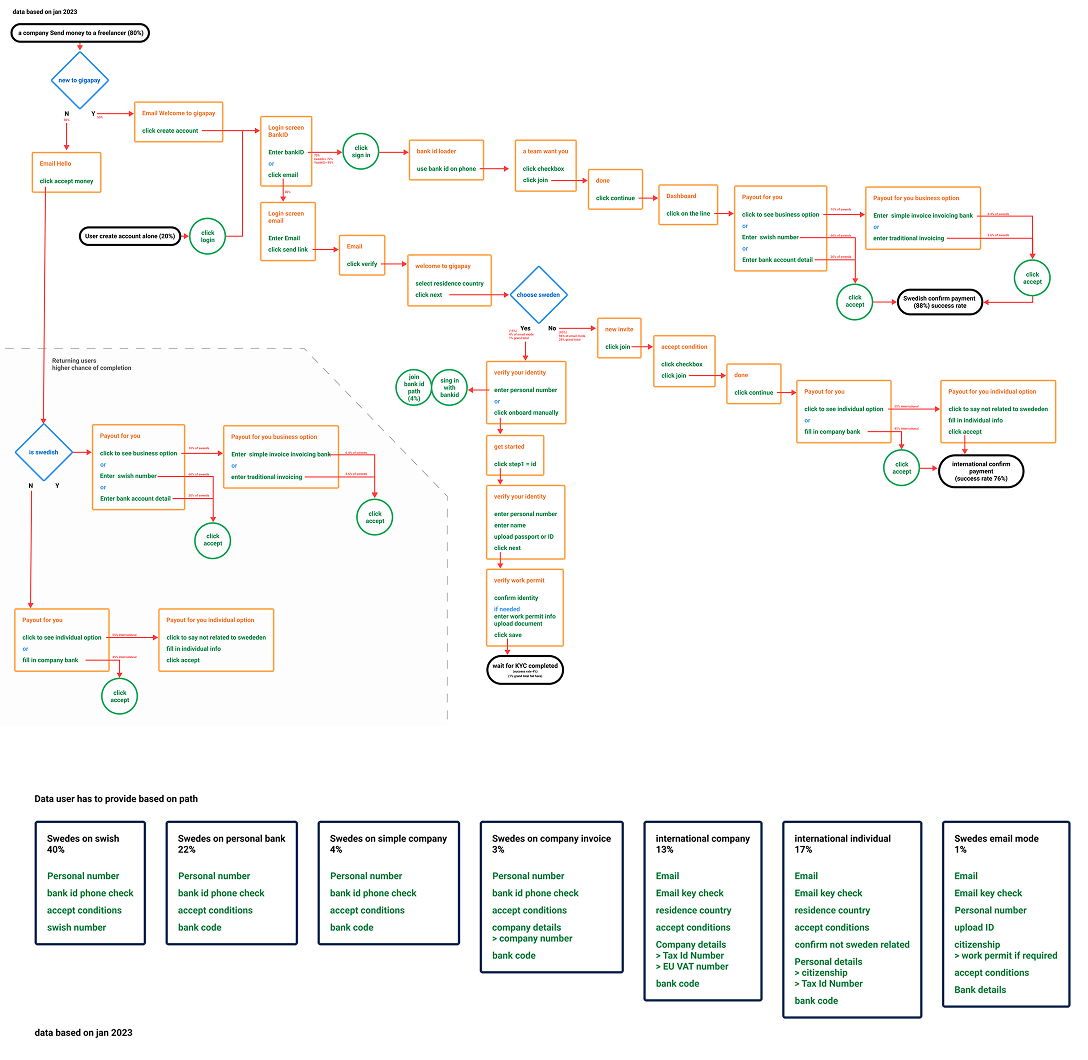
The main work in this project was to assess the current data collection process for each kind of user, understand our funnels and how much traffic would be impacted by a specific change, and talk with the legal team about the data requirements currently missing in the model.

“Something I advocated early on in this project is to break down the experience into several purpose-focused simple steps. My argument was that reducing the amount of cognitive load and stress on each screen exceeds the cost of an additional click. On top of this we can do partial validation and better monitor user pain points.”
Monitoring and iterating
Throughout production and after each country was enabled we reviewed the performance of the onboarding on a macro scale via Mixpanel dashboards, and on the micro scale by looking at Hotjar recordings. I was also directly receiving customer feedback by being partially engaged in the support team during the project.
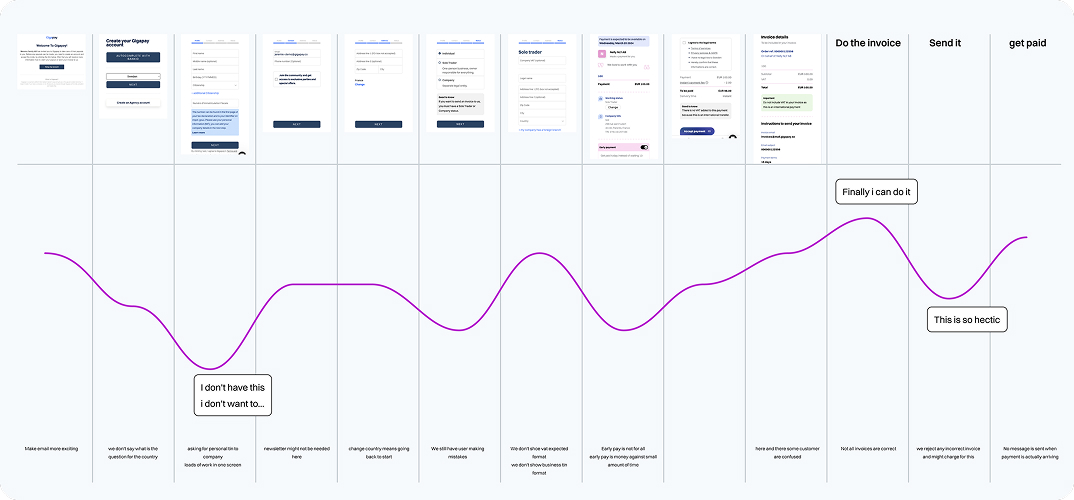
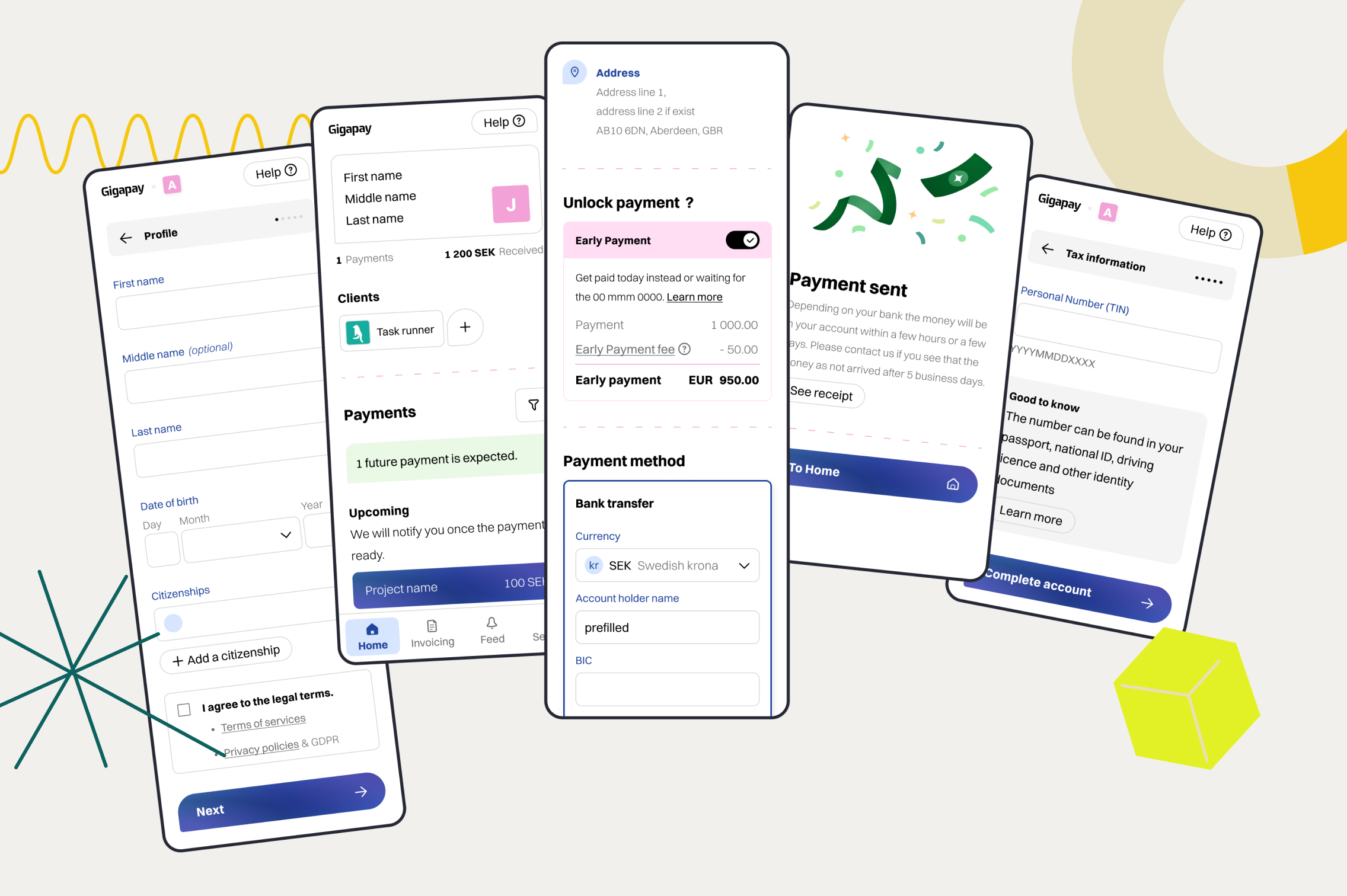
Onboarding experience
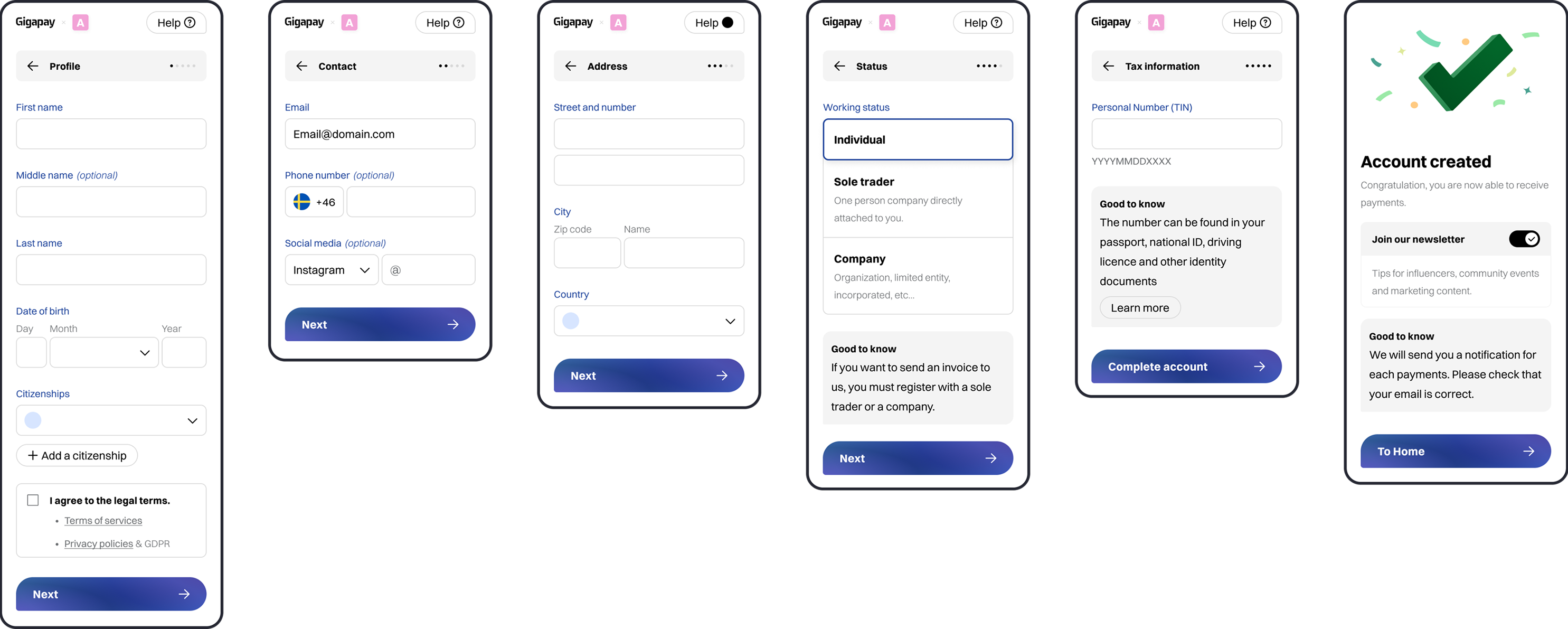
Outcome
We created a multi-step international user onboarding experience, scaling up in volume and in countries while reducing the number of support requests. By the end of the project we had quadrupled our international payment volume and reduced chat requests by 30%. By adding further error messages and explanations we also halved ticket resolution time, as we had a better understanding of existing problems.
Learnings
Requirements and needs are dynamic and never set in stone. In the first prototype I made the mistake of taking the legal brief as a fixed document, not allowing the system any flexibility. We had to quickly create an onboarding redesign v2 that could deliver changes as small interchangeable items instead of one monolithic block. Now I always look for ways to break down a project delivery into small reversible work items.